


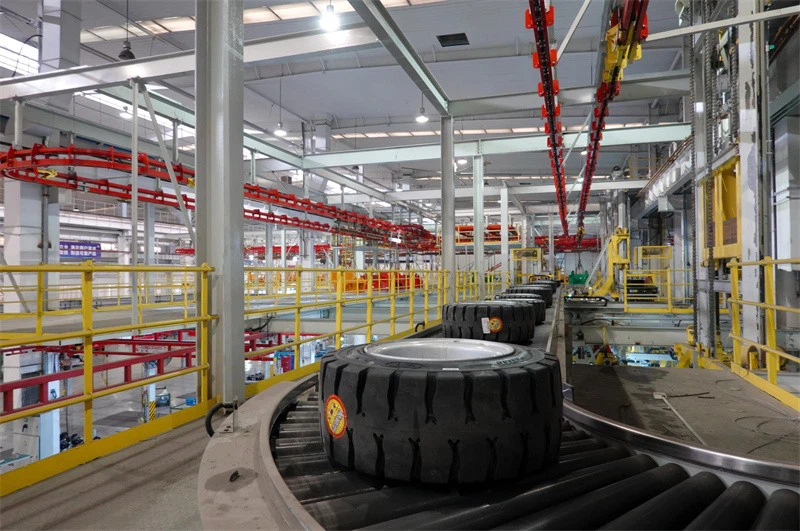


product features
Efficient transport: Relies on roller rotation to move goods, enabling continuous and smooth conveying without manual pushing, which significantly improves handling speed.
Low friction operation: The rolling contact between rollers and goods reduces friction, minimizing wear on both the conveyor and the transported items
Wide application scope: Compatible with various goods types, including cartons, pallets, plastic boxes, and large mechanical components, covering industries like logistics, manufacturing, and warehousing.
Adjustable speed: Equipped with motor-driven systems (for powered models) that allow speed adjustment, matching the rhythm of upstream and downstream processes
Easy integration: Can be combined with other equipment (e.g., sensors, sorters, or lifting platforms) to form automated systems, supporting smart logistics operations like automatic counting or path switching.
product material
Carbon Steel: Carbon steel rollers are highly favored in the field of conveyor rollers due to their high strength, and relatively low cost.
Common types
|
Classification Basis |
Specific Type |
|
Drive Mode |
Powered Roller Conveyor |
|
|
Unpowered Roller Conveyor |
|
|
Accumulating Roller Conveyor |
|
Roller Shape |
Straight Roller Conveyor |
|
|
Crowned Roller Conveyor |
|
|
Grooved Roller Conveyor |
|
|
Knurled Roller Conveyor |
|
Application Scenario |
Gravity Roller Conveyor |
|
|
Pallet-handling Roller Conveyor |
|
|
Flexible Roller Conveyor |
Craftsmanship
1. Roller Surface Treatment Processes
Electroplating/Chrome Plating
Powder Coating
Rubber/PU Coating (Sleeving)
Knurling/Embossing
2. Precision Machining Processes for Rollers
CNC Turning/Milling
Dynamic Balancing
Bearing Press-Fitting
3. Frame Special Fabrication Processes
Welding & Stress Relief
Aluminum Profile Extrusion & Anodizing
Modular Punching & Riveting
Maintenance
Annual maintenance involves comprehensive overhauls to address wear and tear that daily/weekly checks may miss.
Component Wear Inspection: Measure roller wear (e.g., uneven surface, reduced diameter) and replace severely worn rollers; check bearing condition (if bearings feel rough or stuck when rotated by hand, replace them).
Drive System Overhaul: For powered conveyors, inspect the motor, reducer, and electric rollers-clean internal dust (if accessible), check oil levels in reducers, and replace old lubricating oil.
Frame & Structure Check: Inspect the frame for deformation (use a level to check horizontal/vertical alignment) and repair or reinforce bent sections; check the conveyor's inclination angle (for gravity conveyors) to ensure it meets design standards.
Common Faults & Troubleshooting
|
Fault Phenomenon |
Possible Cause |
Troubleshooting Method |
|
Rollers not rotating |
1. Bearings seized due to lack of lubrication |
1. Disassemble and lubricate/replace bearings |
|
2. Debris jammed between rollers |
2. Clear debris from gaps |
|
|
3. Roller axles bent |
3. Replace bent axles/rollers |
|
|
Conveyor speed inconsistent (powered type) |
1. Drive belt/chain tension uneven |
1. Adjust belt/chain tension |
|
2. Motor reducer oil insufficient or deteriorated |
2. Add/replace reducer oil |
|
|
3. Voltage instability |
3. Check power supply and stabilize voltage |
|
|
Abnormal noise during operation |
1. Loose components (e.g., rollers, frames) |
1. Tighten all fasteners |
|
2. Bearings worn or damaged |
2. Replace worn bearings |
|
|
3. Drive gears meshing improperly |
3. Adjust gear alignment or replace damaged gears |
Precautions for use
Don't overload: Never put goods heavier than the conveyor's rated load to avoid breaking rollers or bending the frame.
Center goods: Place goods in the middle of the rollers, not leaning to one side-this prevents tipping or uneven roller wear.
Hands off moving parts: Keep hands, gloves, or tools away from rotating rollers and drive chains while the conveyor is running.
Stop first for issues: If you hear strange noises, see goods jamming, or notice equipment shaking, press the emergency stop button right away.
Clean after use: Wipe off material residues from roller gaps and turn off the power (for powered conveyors) when done.
FAQ
|
Q: How to track the delivery of spare parts after ordering? |
|
A: After placing a spare part order, you will receive a tracking number via SMS/email within 12 hours. Check status via the logistics provider's platform. |
|
Q: Can I request an extra on-site training session (beyond the free post-installation one)? |
|
A: Yes. Extra training charge (including trainer travel). We can customize the training content (e.g., advanced maintenance, new operator training) based on your needs. |
Hot Tags: collapsible roller conveyor, China collapsible roller conveyor manufacturers, suppliers, factory, roller conveyor powered by electricity, roller conveyor reusable, roller conveyor user friendly, roller conveyor easy to operate, roller conveyor growing, roller conveyor eco friendly


