

Roller Conveyor
Your Leading Roller Conveyor Supplier
Chengde Jinlong Conveyor Machinery Co.,Ltd., has over 30 years of history and is a professional enterprise specializing in the design, manufacturing, installation, commissioning, and mechanical-electrical integration of conveyor systems. A roller conveyor consists of a series of rollers on axles mounted to a frame. Roller conveyor systems are used to move many different types of heavy and unwieldy items. Roller conveyors are used in warehousing, package handling, and manufacturing applications to move materials, goods, and heavy loads safely.
-
![Collapsible Roller Conveyor]() Collapsible Roller ConveyorRoller conveyor, also known as roller conveyor or roller conveyor, refers to a conveyor that uses a number of rollers set up on a fixed bracket at a certain interval to transport items. It is...read more
Collapsible Roller ConveyorRoller conveyor, also known as roller conveyor or roller conveyor, refers to a conveyor that uses a number of rollers set up on a fixed bracket at a certain interval to transport items. It is...read more

Why Choose Us
Professional Team
The company was established in 1990, covers an area of 120,000 square meters, and has 270 employees, including 18 management team members and 36 senior engineers.
Reliable Product Quality
We are committed to building the 'Jinlong' brand, have passed ISO9001 quality system certification, and established a complete quality control assurance system.
Wide Range of Applications
Our products have found extensive applications across various sectors, including automotive, new energy vehicles, construction machinery, steel rolling, aluminum smelting, casting, motorcycles, electric bicycles, home appliances, furniture manufacturing, ceramics production, and other industries.
Production Market
The products have been exported to countries and regions including Brazil, Thailand, Vietnam, Serbia, India South Korea the United Arab Emirates South Africa Uzbekistan etc.
Specifications of Roller Conveyor
|
Special Feature |
Breathable, Heat Resistant, Fire Resistant, easy |
Dimension(L*W*H) |
2500*600*300(卤30)mm |
|
Material |
STAINLESS STEEL |
Layer |
1 Layer, 2 layer |
|
Belt Material |
Steel Alloy, STAINLESS STEEL |
Speed |
Adjustable |
|
Voltage |
Customized |
Applicable Industries |
Manufacturing Plant, Food & Beverage Factory, Farms, |
|
Conveying capacity |
600kg/s |
Conveying distance |
0-1000m |
|
Nut |
Standard parts |
Main beam |
C-type steel |
|
Belt material |
Roller |
Conveying mode |
Unpowered conveying |
|
Warranty |
1 Year |
Application |
Furniture factory, logistics, packaging industry |
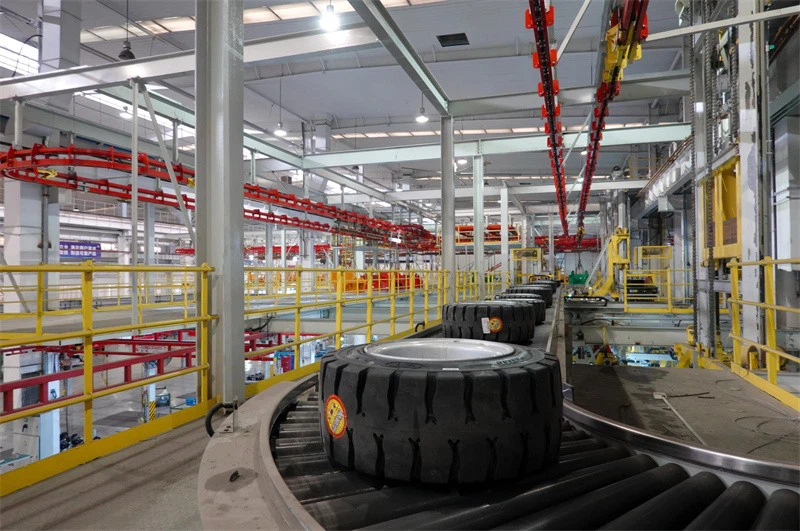
Economical, ecological and safe operation of roller conveyors:
Unlike traditional belts, the roller conveyor reduces friction between the surface and the box, which increases the life of the boxes and minimizes the risk of damage. At the same time, they also reduce the consumption of electrical energy for the transport of goods, because they do not catch up with the friction between the belt and the supporting structure.
Flexibility of roller tracks:
Roller conveyors can be easily adapted to different box shapes and sizes.
Roller Conveyor Maintenance and Safety:
Roller conveyors are designed to require minimal maintenance. Due to their simplicity, they are less prone to failure than more complex transport systems. In addition, the movement of cardboard boxes along the roller conveyor is safe, as the risk of jamming or wedging is minimized.
Installation of Roller Conveyor
Site Preparation
Survey the installation area for proper leveling and alignment. Ensure the site is free from obstructions and has sufficient space for the conveyor's footprint.
Foundation Construction
If needed, construct a solid foundation or structure to support the conveyor frame. The foundation should accommodate the conveyor's weight and the load it will carry.
Frame Assembly
Begin by assembling the conveyor frame, securing all components with bolts and welds as per manufacturer guidelines. Use a spirit level to maintain horizontal alignment.
Idler Installation
As part of how to install a conveyor belt, install troughing idlers at specified intervals. Ensure they are correctly angled and aligned to prevent belt misalignment during operation.
Belt Placement
Carefully position the belt over the frame and idlers. Secure one end to the drive drum and the other to the take-up pulley.
Drive and Tensioning Setup
Attach the drive system, ensuring that motors and gearboxes are properly secured. Adjust the tensioning system to ensure the belt remains taut without over-tensioning.
Loading and Discharge Points
Install the loading and discharge points, ensuring a smooth material flow. If necessary, add impact beds at loading zones to cushion the belt.
Final Adjustments and Testing
Inspect the entire system for alignment and secure fittings. Conduct a test run without a load to identify and correct any operational issues before full-scale production.
Usage of Roller Conveyor
Moving products across large areas with less labor
1
>>
Transportation of heavy and cumbersome goods and materials
2
>>
Saving labor costs by moving products while other activities are completed
3
>>
Prevent injuries to workers from the stress of lifting to items falling
4
>>
Ensure the safe transport of products with damaging them
5
>>
Integral parts of robotic functions and actions.
Certificate

Packaging & Delivery
|
Packaging |
Wrapped by proctective film; |
|
Packed by standard import & export wooden cases or pallets. |
|
|
Shipping |
By logistics; by automobile; by train; by shipping. |
Payment Terms
- T.T with 30% downpayment, 70%before shipment.
- Paypal or West Union also accept.
FAQ
As one of the most professional roller conveyor manufacturers and suppliers in China, we're featured by quality products and good service. Please rest assured to buy customized roller conveyor made in China here from our factory.
roller conveyor reusable, roller conveyor safe for environment, roller conveyor pneumatic