

Hey there! As a supplier of Friction Drive Conveyors, I've seen firsthand how crucial it is to understand the ins and outs of conveyor performance. One aspect that often gets overlooked but has a significant impact is the belt width. In this blog post, I'll dive into what effect belt width has on the performance of a friction drive conveyor.
Understanding Friction Drive Conveyors
Before we get into the nitty - gritty of belt width, let's quickly go over what a friction drive conveyor is. A Friction Drive Conveyor is a type of conveyor system that uses friction to move materials along. It consists of a belt that is driven by a motor, and the friction between the belt and the load allows for the transportation of various items. These conveyors are widely used in industries such as manufacturing, warehousing, and logistics due to their reliability and efficiency.
The Basics of Belt Width
The belt width of a friction drive conveyor refers to the measurement of the belt from one edge to the other, perpendicular to the direction of travel. Belt widths can vary significantly depending on the application and the type of materials being transported. Common belt widths range from a few inches to several feet.
Impact on Load Capacity
One of the most obvious effects of belt width on conveyor performance is its impact on load capacity. A wider belt can generally carry more weight compared to a narrower one. This is because a wider belt provides a larger surface area for the load to rest on, distributing the weight more evenly.
For example, if you're transporting heavy pallets in a warehouse, a conveyor with a wider belt will be able to handle the weight without overloading the system. On the other hand, a narrow - belt conveyor might struggle to support the same pallets, leading to potential belt damage or even system failure. In high - volume manufacturing environments where large quantities of heavy products are being moved, a wider belt is often a necessity to ensure smooth operation.
Influence on Stability
Belt width also plays a role in the stability of the conveyor system. A wider belt tends to be more stable during operation. When the load is placed on a wider belt, there is less chance of it tipping over or shifting to one side. This is especially important when transporting irregularly shaped or tall items.
Let's say you're using a friction drive conveyor to move furniture parts. These parts might have different shapes and sizes, and a wider belt will provide a more stable platform for them. In contrast, a narrow belt could cause the furniture parts to wobble or fall off during transit, leading to product damage and production delays.
Effect on Speed and Efficiency
The belt width can affect the speed and efficiency of a friction drive conveyor. A wider belt can sometimes allow for higher speeds because it can better handle the forces associated with faster movement. With a larger surface area in contact with the load, the belt can transfer power more effectively, enabling the conveyor to move materials at a quicker pace.
However, it's not always a straightforward relationship. In some cases, a very wide belt might increase the resistance and require more power to operate, which could potentially slow down the system. So, finding the right balance is key. For instance, in a food processing plant where products need to be moved quickly and precisely, the conveyor's speed and efficiency are critical. Selecting the appropriate belt width can optimize these factors.
Considerations for Product Alignment
Another aspect to consider is product alignment. A wider belt can make it easier to align products during transportation. When products are placed on a wide belt, they have more room to be centered and positioned correctly. This is beneficial in applications where products need to be sorted or packaged in a specific order.
In an e - commerce fulfillment center, for example, packages of different sizes need to be properly aligned on the conveyor to ensure accurate scanning and sorting. A wider belt provides more space for the packages to be arranged neatly, improving the overall efficiency of the sorting process.
Compatibility with Other Equipment
The belt width of a friction drive conveyor also needs to be compatible with other equipment in the production line. For example, if the conveyor is connected to a packaging machine or a robotic arm, the belt width must match the requirements of these devices.
If the belt is too wide or too narrow, it can cause issues with the transfer of products between different pieces of equipment. A narrow belt might not be able to transfer products smoothly to a wider - opening packaging machine, while a wide belt could cause alignment problems with a robotic arm designed for a specific width.
Cost - Benefit Analysis
When considering the effect of belt width on conveyor performance, it's important to conduct a cost - benefit analysis. A wider belt generally costs more than a narrow one, both in terms of the initial purchase price and ongoing maintenance.
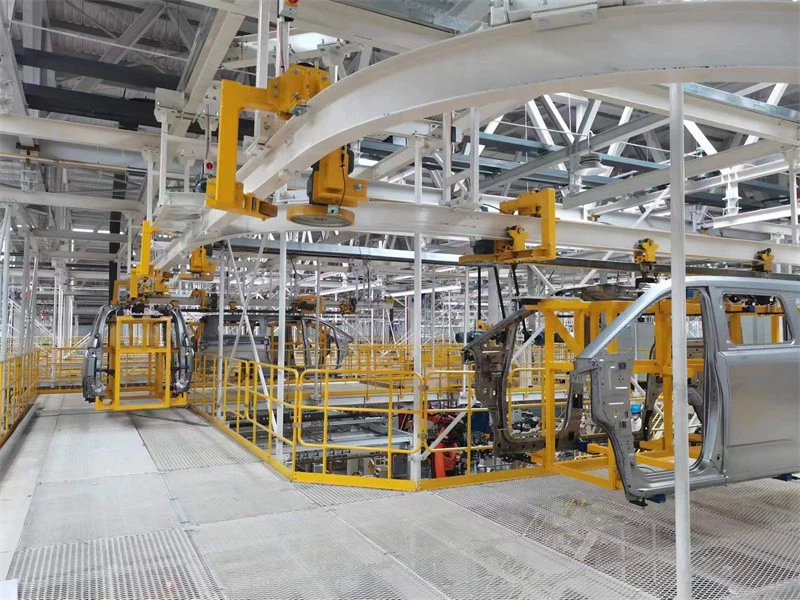

However, if the benefits of a wider belt, such as increased load capacity, stability, and efficiency, outweigh the additional costs, then it's a worthwhile investment. On the other hand, if the application doesn't require the features provided by a wider belt, then a narrower belt might be a more cost - effective option.
Conclusion
In conclusion, the belt width of a friction drive conveyor has a profound impact on its performance. It affects load capacity, stability, speed, efficiency, product alignment, and compatibility with other equipment. As a supplier, I always recommend carefully evaluating your specific application requirements before choosing a belt width.
If you're in the market for a Friction Drive Conveyor or a Friction Overhead Conveyor and need help determining the right belt width for your needs, don't hesitate to reach out. We're here to assist you in making the best decision for your business. Whether you're looking to improve your production line's efficiency, increase load capacity, or enhance product alignment, we can provide you with the right conveyor solution. Let's talk and see how we can optimize your conveyor system together!
References
- Groover, M. P. (2016). Automation, Production Systems, and Computer - Integrated Manufacturing. Pearson.
- Alting, L., & Zhang, H. (1999). Manufacturing Automation: Metal Cutting Mechanics, Machine Tool Vibrations, and CNC Design. Cambridge University Press.