

As a seasoned supplier of slat conveyors, I've had the privilege of delving deep into the intricacies of these remarkable pieces of machinery. Slat conveyors are widely used across various industries due to their robustness, versatility, and ability to handle heavy loads. In this blog post, I'll break down the main components of a slat conveyor, shedding light on how each part contributes to the overall functionality and efficiency of the system.
Slats
The slats are the most visible and fundamental component of a slat conveyor. These are flat, rigid pieces that are connected to form a continuous surface for transporting materials. Slats can be made from a variety of materials, each chosen based on the specific requirements of the application.
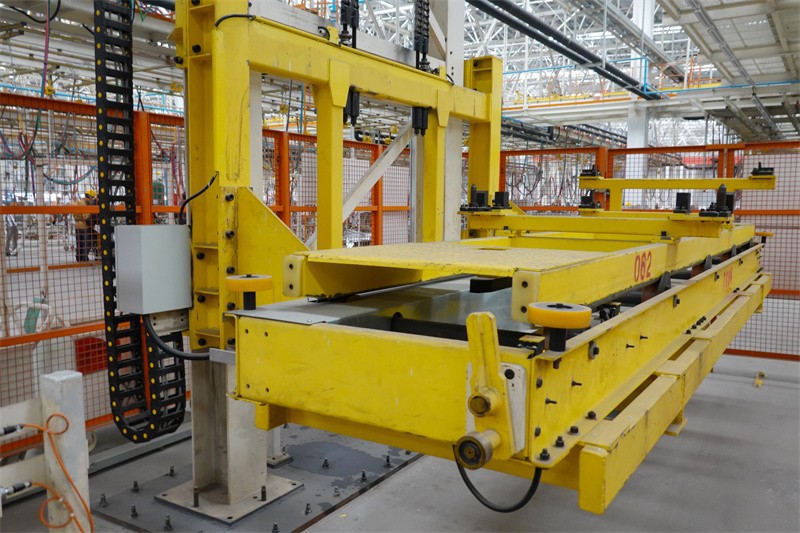

- Metal Slats: Commonly made from steel or aluminum, metal slats offer high strength and durability. They are ideal for applications involving heavy loads, sharp objects, or high temperatures. Steel slats, in particular, are resistant to wear and tear, making them suitable for long - term use in demanding industrial environments. For example, in automotive manufacturing plants, metal slats are used to transport heavy engine components along the assembly line.
- Plastic Slats: Plastic slats are lightweight, corrosion - resistant, and often more affordable than metal slats. They are a popular choice for applications where cleanliness is crucial, such as in the food and beverage industry. Plastic slats can also be easily customized in terms of color, shape, and size. The Plastic Single - path and Dual - path Slat Conveyor utilizes plastic slats to provide a smooth and hygienic conveying solution.
Chain Assembly
The chain assembly is responsible for moving the slats along the conveyor path. It consists of chains, sprockets, and attachments.
- Chains: There are different types of chains used in slat conveyors, including roller chains and engineered chains. Roller chains are the most common type and are known for their reliability and smooth operation. They consist of a series of interconnected links with rollers that reduce friction as the chain moves over the sprockets. Engineered chains, on the other hand, are designed for specific applications and may have special features such as increased strength or corrosion resistance.
- Sprockets: Sprockets are toothed wheels that engage with the chains to transfer power and motion. They come in various sizes and tooth profiles, depending on the type of chain and the desired speed and torque of the conveyor. Proper alignment and sizing of the sprockets are essential for the efficient operation of the chain assembly.
- Attachments: Attachments are used to connect the slats to the chains. They ensure that the slats move in unison with the chains and maintain a stable and continuous conveying surface. Different types of attachments are available, such as cleats, flights, and side guards, which can be customized to meet the specific needs of the application.
Drive Unit
The drive unit is the power source of the slat conveyor. It provides the necessary energy to move the chain and the slats.
- Motor: The motor is the heart of the drive unit. It can be an electric motor, hydraulic motor, or pneumatic motor, depending on the application requirements. Electric motors are the most commonly used due to their efficiency, controllability, and availability. They can be further classified into AC motors and DC motors, each with its own advantages and disadvantages.
- Reducer: A reducer is used to reduce the speed of the motor and increase the torque. This is necessary because the motor typically operates at a high speed, while the conveyor requires a lower speed and higher torque to move the load. The reducer is usually a gearbox that contains a series of gears to achieve the desired speed reduction ratio.
- Couplings: Couplings are used to connect the motor to the reducer and the reducer to the drive shaft of the conveyor. They transmit the power from the motor to the conveyor while allowing for some misalignment between the components. Flexible couplings are often used to absorb shock and vibration, ensuring smooth operation and reducing wear on the components.
Frame
The frame provides the structural support for the entire slat conveyor system. It holds all the components in place and ensures their proper alignment.
- Material: The frame can be made from various materials, such as steel, aluminum, or stainless steel. Steel frames are strong and durable, making them suitable for heavy - duty applications. Aluminum frames are lightweight and corrosion - resistant, which is beneficial in applications where weight is a concern or where the conveyor is exposed to harsh environments. Stainless steel frames are used in applications where hygiene is a top priority, such as in the pharmaceutical and food industries.
- Design: The frame design can vary depending on the application and the layout of the conveyor. It can be a simple open - frame design or a more complex enclosed - frame design. Enclosed frames offer better protection for the internal components of the conveyor and can also help to contain dust and debris.
Idler Rollers
Idler rollers are used to support the slats and the chain along the conveyor path. They reduce friction and ensure smooth movement of the conveyor.
- Position: Idler rollers are typically placed at regular intervals along the length of the conveyor. They can be located above the slats to support the carrying side of the conveyor or below the slats to support the return side.
- Function: The main function of the idler rollers is to guide the chain and the slats and prevent them from sagging or deviating from the intended path. They also help to distribute the weight of the load evenly across the conveyor, reducing stress on the chains and the slats.
Guide Rails
Guide rails are used to keep the slats and the chain in the correct position and prevent them from moving sideways.
- Material and Design: Guide rails can be made from metal or plastic and are usually mounted on the frame of the conveyor. They can be designed as simple flat bars or as more complex profiles with grooves or channels to guide the slats and the chain.
- Function: Guide rails play a crucial role in ensuring the stability and accuracy of the conveyor operation. They help to maintain the proper alignment of the slats and the chain, which is essential for the efficient transportation of materials.
Controls and Sensors
Controls and sensors are used to monitor and control the operation of the slat conveyor.
- Control Panel: The control panel is the central hub of the conveyor control system. It allows the operator to start, stop, and adjust the speed of the conveyor. It also provides information about the status of the conveyor, such as the motor current, temperature, and conveyor speed.
- Sensors: Sensors are used to detect various parameters of the conveyor, such as the presence of materials, the position of the slats, and the speed of the chain. They can be proximity sensors, photoelectric sensors, or limit switches. The information from the sensors is sent to the control panel, which can then take appropriate actions, such as stopping the conveyor if a jam is detected or adjusting the speed based on the load.
In conclusion, a slat conveyor is a complex system composed of several key components, each of which plays a vital role in its operation. Whether you need a Heavy Duty Slat Conveyor for transporting heavy loads or a plastic slat conveyor for a clean and hygienic application, understanding the main components of the conveyor is essential for making the right choice.
If you're in the market for a slat conveyor or have any questions about our products, we'd love to hear from you. Our team of experts is ready to assist you in selecting the right conveyor for your specific needs and to provide you with professional installation and after - sales service. Contact us today to start the procurement process and discuss how our slat conveyors can improve your operations.
References
- Conveyor Equipment Manufacturers Association (CEMA). Conveyor Handbook.
- Groover, M. P. (2010). Automation, Production Systems, and Computer - Integrated Manufacturing. Prentice Hall.