

Hey there! As a supplier of roller conveyor chains, I've seen firsthand the importance of synchronization methods in keeping things running smoothly. In this blog, I'll share some of the key synchronization methods for roller conveyor chains that I've come across in my years in the industry.
Why Synchronization Matters
Before we dive into the methods, let's quickly talk about why synchronization is so crucial for roller conveyor chains. When multiple conveyor chains are working together in a system, they need to move at the same speed and in harmony. If one chain moves too fast or too slow compared to the others, it can lead to all sorts of problems. For example, products might get jammed, misaligned, or even fall off the conveyor. This can cause production delays, damage to the products, and increased maintenance costs. So, getting the synchronization right is essential for the efficient and reliable operation of any roller conveyor system.
Mechanical Synchronization
One of the most common ways to synchronize roller conveyor chains is through mechanical means. This typically involves using gears, sprockets, and shafts to connect the chains and ensure they rotate at the same speed.
Gears and Sprockets
Gears and sprockets are essential components in a mechanical synchronization system. The sprockets are attached to the shafts of the conveyor chains, and the gears are used to transfer power between the sprockets. By carefully selecting the gear ratios, you can ensure that all the chains move at the same speed. For example, if you have two conveyor chains that need to be synchronized, you can use a pair of gears with the same number of teeth on each sprocket. This will ensure that for every rotation of one chain, the other chain rotates at the same rate.
Shaft Couplings
Shaft couplings are another important part of mechanical synchronization. They are used to connect the shafts of different conveyor chains together. There are several types of shaft couplings available, such as rigid couplings, flexible couplings, and universal joints. Rigid couplings are used when the shafts are perfectly aligned, while flexible couplings can accommodate some misalignment between the shafts. Universal joints are used when the shafts need to be connected at an angle.
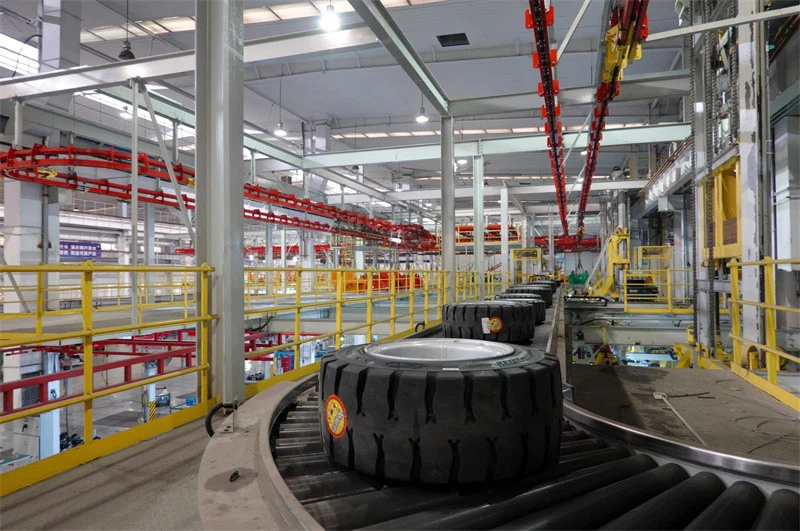

Mechanical synchronization is a tried-and-true method that has been used in the industry for many years. It's relatively simple and reliable, but it does require some maintenance to keep the gears, sprockets, and couplings in good condition.
Electrical Synchronization
In addition to mechanical synchronization, electrical methods are also widely used to synchronize roller conveyor chains. Electrical synchronization offers several advantages, such as greater flexibility and the ability to adjust the speed of the chains more precisely.
Variable Frequency Drives (VFDs)
Variable frequency drives are one of the most popular electrical synchronization methods. A VFD is a device that controls the speed of an electric motor by varying the frequency of the electrical power supplied to the motor. By using VFDs to control the motors of different conveyor chains, you can easily adjust the speed of each chain to ensure they are synchronized.
For example, let's say you have a conveyor system with three chains. You can install a VFD on each motor that drives the chains. Then, you can use a control system to send signals to the VFDs, telling them to adjust the speed of the motors so that all the chains move at the same speed. VFDs also allow you to make fine adjustments to the speed of the chains, which is useful for handling different types of products or changing the production rate.
Encoders
Encoders are another important component in electrical synchronization. An encoder is a device that measures the speed and position of a rotating shaft. By installing encoders on the shafts of the conveyor chains, you can monitor the speed of each chain in real-time. The encoder sends signals to a control system, which can then adjust the speed of the motors to keep the chains synchronized.
Encoders are very accurate and can provide precise feedback on the speed and position of the chains. This makes them ideal for applications where high levels of synchronization are required, such as in automated manufacturing processes.
Programmable Logic Controllers (PLCs)
Programmable logic controllers, or PLCs, are often used in conjunction with electrical synchronization methods to control and monitor the operation of roller conveyor chains. A PLC is a digital computer that can be programmed to perform a variety of tasks, such as controlling the speed of motors, monitoring sensors, and sending signals to other devices.
With a PLC, you can create a complex control program that takes into account various factors, such as the speed of the chains, the position of the products on the conveyor, and the status of other equipment in the system. The PLC can then use this information to adjust the speed of the motors and ensure that the chains are synchronized.
For example, if a sensor detects that a product is getting too close to the end of a conveyor chain, the PLC can send a signal to the VFD to slow down the chain to prevent the product from falling off. PLCs offer a high level of flexibility and can be easily reprogrammed to adapt to different production requirements.
Synchronization in Collapsible Roller Conveyors
When it comes to Collapsible Roller Conveyor, synchronization becomes even more important. Collapsible roller conveyors are designed to be easily folded and unfolded, which means they need to be able to quickly and accurately synchronize their chains when they are set up for use.
In a collapsible roller conveyor, the synchronization methods mentioned above can still be applied. However, special attention needs to be paid to the design of the conveyor to ensure that the chains can be easily connected and disconnected during the folding and unfolding process. For example, the electrical connections for the VFDs and encoders need to be designed in a way that they can be easily plugged and unplugged without causing any damage.
Conclusion
In conclusion, there are several synchronization methods available for roller conveyor chains, including mechanical, electrical, and the use of PLCs. Each method has its own advantages and disadvantages, and the choice of method depends on the specific requirements of your conveyor system. Whether you're using a simple mechanical synchronization system or a more advanced electrical system with PLCs, getting the synchronization right is essential for the efficient and reliable operation of your roller conveyor chains.
If you're in the market for roller conveyor chains or need help with synchronization, don't hesitate to reach out. We're here to provide you with the best solutions for your needs. Whether you have a small-scale operation or a large industrial facility, we can work with you to find the right synchronization method and the highest-quality roller conveyor chains for your application. Let's get your conveyor system running smoothly and efficiently!
References
- "Conveyor Belt Handbook" by Christopher J. Ruff
- "Fundamentals of Industrial Automation" by David A. Bell
- "Variable Frequency Drives: Selection, Application, and Troubleshooting" by Robert W. Erickson