

Hey there! I'm a supplier of roller conveyor bands, and I've seen all sorts of these bad boys in my time. Roller conveyor bands are super important in all kinds of industries, from manufacturing to warehousing. They help move stuff around quickly and efficiently. But did you know there are different types of roller conveyor bands, and they each have their own unique features? In this blog, I'm gonna break down the differences between these types so you can pick the right one for your needs.
Gravity Roller Conveyor Bands
Let's start with gravity roller conveyor bands. These are probably the most basic type out there. They work on a simple principle: gravity. The rollers are set at a slight incline, so when you put something on the conveyor, it just rolls down on its own. No motors or fancy electronics needed.
One of the biggest advantages of gravity roller conveyors is their simplicity. They're easy to install and maintain. You don't have to worry about electrical systems or complex controls. They're also pretty affordable compared to other types. If you're on a tight budget and just need a basic way to move light to medium - weight items, gravity roller conveyors are a great choice.
However, they do have some limitations. Since they rely on gravity, they can only move things in one direction (downhill). You also need to make sure the items you're moving are stable enough to roll smoothly. If you have irregularly shaped or very heavy items, gravity roller conveyors might not work as well.
Powered Roller Conveyor Bands
Now, let's talk about powered roller conveyor bands. These are a step up from gravity conveyors. They use motors to drive the rollers, which means they can move items in any direction and at a controlled speed.
Powered roller conveyors are great for handling heavy - duty loads. They can move large and bulky items with ease. You can also adjust the speed of the conveyor to match your production line's needs. This makes them very versatile and suitable for a wide range of industries.
Another advantage is that they can be integrated with other automated systems. For example, you can connect them to robotic arms or sorting machines. This allows for a more efficient and streamlined production process.
But, there are some downsides too. Powered roller conveyors are more expensive to buy and install. They also require more maintenance because of the motors and electrical components. You need to make sure the motors are properly lubricated and the electrical systems are in good condition.
Belt - Driven Roller Conveyor Bands
Belt - driven roller conveyor bands are a bit different. Instead of each roller being directly powered, a belt runs under the rollers and drives them. This type of conveyor is known for its smooth operation.
The belt provides a continuous and even force to the rollers, which means the items being transported move very smoothly. It's great for handling delicate or fragile items that could be damaged by a jerky movement. Belt - driven roller conveyors are also relatively quiet compared to some other types.
They're also easy to clean. Since the belt is the main driving component, there are fewer parts that can get dirty or clogged. This makes them a good choice for industries where hygiene is important, like food processing or pharmaceuticals.
However, the belts do wear out over time and need to be replaced. And if the belt breaks, the whole conveyor can stop working. So, you need to keep an eye on the belt's condition and have replacement parts on hand.
Chain - Driven Roller Conveyor Bands
Chain - driven roller conveyor bands use chains to drive the rollers. This type of conveyor is extremely durable and can handle very heavy loads.
Chains are strong and can transmit a lot of power, which means chain - driven roller conveyors can move large and heavy items at high speeds. They're commonly used in industries like automotive manufacturing, where heavy parts need to be transported quickly.
They're also very reliable. Chains have a long lifespan and are less likely to break compared to belts. This means less downtime for maintenance and repairs.
But, chain - driven roller conveyors are noisy. The chains make a lot of noise as they move, which can be a problem in some work environments. They also require more lubrication to keep the chains running smoothly.
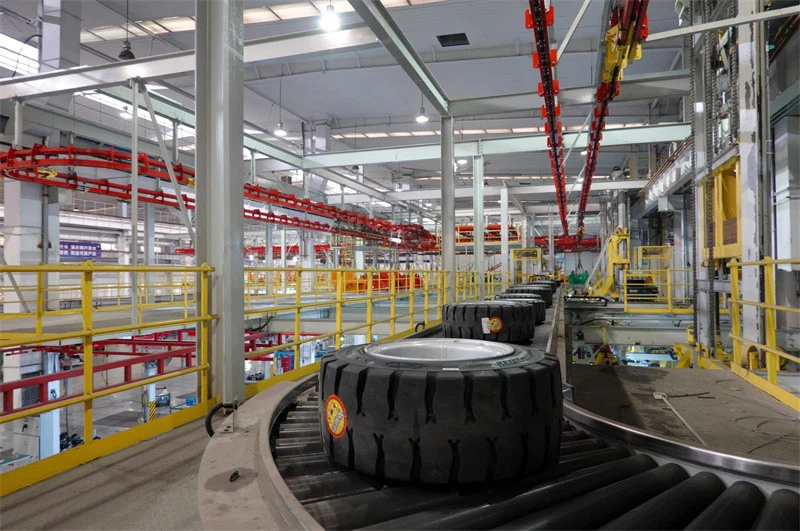

Collapsible Roller Conveyor
If you're looking for something more flexible, check out the Collapsible Roller Conveyor. This type of conveyor is designed to be easily folded up and stored when not in use. It's perfect for temporary setups or places where space is limited.
Collapsible roller conveyors are usually made of lightweight materials, so they're easy to move around. You can set them up quickly and start using them right away. They're great for events, pop - up shops, or small warehouses.
However, they might not be as durable as some of the other types. Since they're designed to be collapsible, they might not be able to handle extremely heavy loads or continuous use.
Selecting the Right Roller Conveyor Band
So, how do you choose the right roller conveyor band for your business? Well, it depends on a few factors.
First, think about the type of items you'll be transporting. If you have light and regular - shaped items, a gravity roller conveyor might be enough. But if you have heavy or irregularly shaped items, you'll probably need a powered or chain - driven conveyor.
Next, consider your budget. Gravity roller conveyors are the most affordable, while powered and chain - driven conveyors are more expensive. You need to balance your budget with your requirements.
Also, think about the space you have available. If you have limited space, a collapsible roller conveyor could be a good option. And if you need to integrate the conveyor with other systems, a powered conveyor might be the way to go.
Conclusion
As you can see, there are many different types of roller conveyor bands, each with its own pros and cons. Whether you need a simple gravity conveyor for a small operation or a heavy - duty chain - driven conveyor for a large manufacturing plant, there's a solution out there for you.
If you're still not sure which type of roller conveyor band is right for you, don't hesitate to reach out. I've got years of experience in this industry, and I can help you find the perfect conveyor for your needs. Whether it's answering your questions, providing a quote, or giving you some advice on installation and maintenance, I'm here to assist. Let's have a chat and see how we can improve your material handling process.
References
- "Conveyor Belt Handbook" by Conveyor Belt Association
- "Industrial Conveyor Systems: Design and Application" by John Doe