

Hey there! As a supplier of roller conveyor bands, I often get asked if these bad boys can handle irregular-shaped objects. Well, let's dive right into this topic and find out.
First off, what are roller conveyor bands? They're basically a series of rollers arranged in a row, and they're used to move stuff from one place to another. They're super common in factories, warehouses, and all sorts of industrial settings. You see them everywhere, moving boxes, packages, and all kinds of goods.

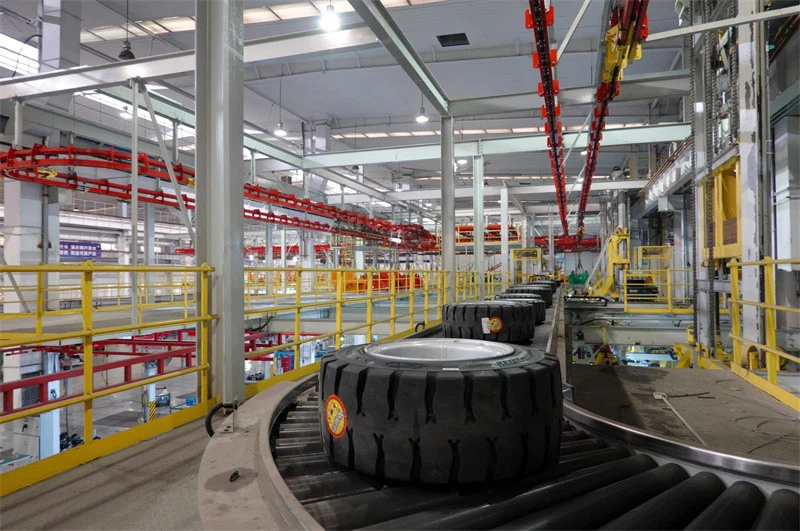
Now, when it comes to irregular-shaped objects, things get a little tricky. Irregular-shaped objects don't have a nice, even surface like a box or a pallet. They can be lumpy, bumpy, or have odd angles. Think of things like sculptures, large machine parts, or even some types of furniture.
So, can roller conveyor bands handle these irregular-shaped objects? The answer is... it depends. There are a few factors we need to consider.
The Shape and Size of the Object
The first thing we need to look at is the shape and size of the object. If the object is too big or too heavy, it might not work well on a roller conveyor band. The rollers need to be able to support the weight of the object evenly. If the object is too heavy in one spot, it could cause the rollers to wear out quickly or even break.
For example, let's say you have a large, oddly-shaped metal part. If it's really heavy and its weight is concentrated in one area, the rollers might not be able to handle it. On the other hand, if the object is relatively light and has a somewhat flat bottom, it might work just fine.
The Type of Roller Conveyor Band
There are different types of roller conveyor bands, and some are better suited for irregular-shaped objects than others. For instance, a Collapsible Roller Conveyor can be a great option. It's flexible and can be adjusted to fit different situations.
Some roller conveyor bands have smaller rollers, which can provide more support for irregular-shaped objects. These smaller rollers can conform to the shape of the object a bit better. Other conveyor bands have larger rollers, which are better for moving bigger, more evenly-shaped objects.
The Surface of the Object
The surface of the object also matters. If the object has a smooth surface, it's more likely to move smoothly on the roller conveyor band. But if it has a rough or sticky surface, it could cause problems. A rough surface might cause friction, which could slow down the movement of the object or even damage the rollers.
Let's take a wooden crate with a rough, splintery surface. It might not glide as easily on the rollers as a smooth plastic container. In this case, we might need to take some extra steps, like adding a lubricant or using a different type of roller material.
Speed and Angle
The speed at which the conveyor band is moving and the angle of the conveyor also play a role. If the conveyor is moving too fast, an irregular-shaped object might tip over or fall off. And if the conveyor is at a steep angle, the object might slide down too quickly or not be able to stay on the rollers at all.
For example, if you're trying to move a tall, thin object up a steep incline on a fast-moving conveyor, it's likely to topple over. You'll need to adjust the speed and angle to make sure the object can be transported safely.
Advantages of Using Roller Conveyor Bands for Irregular-Shaped Objects
Despite the challenges, there are some advantages to using roller conveyor bands for irregular-shaped objects. One big advantage is that they can save a lot of time and effort. Instead of having workers carry these objects around, the conveyor can do the job for them.
They're also relatively easy to install and maintain. You don't need a huge team of experts to set up a roller conveyor band, and if something goes wrong, it's usually not too difficult to fix.
Another advantage is that they can be customized. You can choose the type of rollers, the length and width of the conveyor, and other features to fit your specific needs.
Disadvantages and Challenges
Of course, there are also some disadvantages and challenges. As we mentioned earlier, the object might not move smoothly, and there's a risk of it falling off or getting damaged. There's also the cost. Roller conveyor bands can be expensive, especially if you need a custom-made one.
And then there's the issue of space. You need to have enough room to install the conveyor, and it might not be suitable for all types of facilities.
Solutions and Workarounds
So, what can we do to make roller conveyor bands work better for irregular-shaped objects? One solution is to use guides or fences along the sides of the conveyor. These can help keep the object in place and prevent it from falling off.
We can also use sensors to monitor the movement of the object. If the object starts to tip or move in an unexpected way, the sensors can detect it and stop the conveyor or adjust its speed.
Another option is to use a combination of different types of conveyors. For example, you could use a roller conveyor for the main part of the journey and then switch to a belt conveyor for the more delicate parts.
Conclusion
In conclusion, roller conveyor bands can be used for conveying irregular-shaped objects, but it's not always a straightforward process. You need to consider the shape and size of the object, the type of conveyor, the surface of the object, the speed and angle, and other factors.
If you're thinking about using roller conveyor bands for your irregular-shaped objects, it's a good idea to talk to an expert. As a supplier, I've helped many customers find the right solution for their needs. We can work together to figure out the best type of conveyor, the right settings, and any additional features you might need.
If you're interested in learning more about our roller conveyor bands or have a specific project in mind, don't hesitate to get in touch. We're here to help you make the most of your conveyor system and ensure that your irregular-shaped objects are transported safely and efficiently.
References
- Industrial Conveyor Handbook, various authors
- Conveyor Technology Journal, multiple issues