

Can a roller conveyor be automated? This is a question that many businesses in the material handling industry often ponder. As a supplier of roller conveyors, I have seen firsthand the transformative power of automation in this field. In this blog post, I will explore the possibilities of automating roller conveyors, the benefits it brings, and how our company can assist you in this process.
The Basics of Roller Conveyors
Before delving into automation, let's briefly understand what roller conveyors are. Roller conveyors are a type of material handling equipment that uses a series of rollers to move goods from one point to another. They are commonly used in warehouses, distribution centers, manufacturing plants, and other industrial settings. Roller conveyors can be powered or gravity - operated. Powered roller conveyors use motors to drive the rollers, while gravity roller conveyors rely on the force of gravity to move the items.
The Feasibility of Automating Roller Conveyors
The short answer is yes, roller conveyors can be automated. Automation in roller conveyors involves integrating various technologies to control the movement, sorting, and positioning of goods on the conveyor system. Here are some of the key components and technologies that enable automation:
Sensors
Sensors play a crucial role in automating roller conveyors. They can detect the presence, position, and size of the items on the conveyor. For example, photoelectric sensors can be used to detect when an item has reached a certain point on the conveyor, triggering other actions such as diverting the item to a different line. Proximity sensors can be used to ensure that items are spaced correctly on the conveyor, preventing collisions.
Programmable Logic Controllers (PLCs)
PLCs are the brains of an automated roller conveyor system. They are used to control the operation of the conveyor, including starting and stopping the motors, adjusting the speed, and coordinating the movement of items with other equipment in the production line. PLCs can be programmed to perform complex sequences of operations based on the input from the sensors.
Drives and Motors
Automated roller conveyors often use variable frequency drives (VFDs) to control the speed of the motors. VFDs allow for precise control of the conveyor speed, which is essential for handling different types of items and for integrating with other automated processes. Servo motors can also be used in applications where high precision and rapid acceleration and deceleration are required.
Sorting Devices
Automated sorting is one of the most significant advantages of an automated roller conveyor system. Sorting devices such as pop - up transfers, pushers, and diverters can be integrated into the conveyor to direct items to different destinations based on their size, weight, or other criteria. This is particularly useful in distribution centers where items need to be sorted for shipping to different locations.
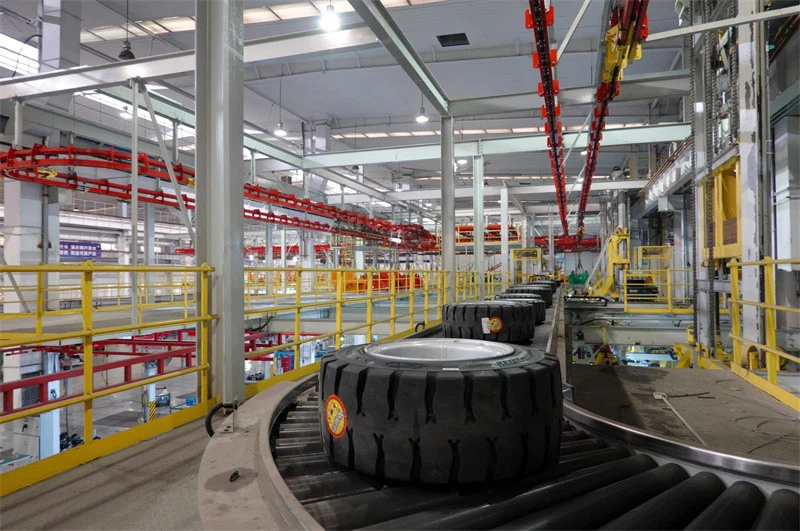

Benefits of Automating Roller Conveyors
There are numerous benefits to automating roller conveyors, which is why more and more businesses are choosing to make the investment.
Increased Efficiency
Automation eliminates the need for manual labor in many aspects of material handling. Items can be moved, sorted, and positioned more quickly and accurately, reducing the time it takes to process goods. This leads to higher throughput and increased productivity in the warehouse or manufacturing plant.
Improved Accuracy
Automated systems are less prone to errors compared to manual operations. Sensors and PLCs ensure that items are handled precisely, reducing the risk of misplacement or damage. This is especially important in industries where product quality and accuracy are critical.
Cost Savings
Although the initial investment in automation can be significant, it can lead to long - term cost savings. By reducing the need for manual labor, businesses can save on labor costs. Additionally, increased efficiency and reduced errors can lead to lower operational costs and fewer product returns.
Enhanced Safety
Automated roller conveyors can improve workplace safety by reducing the need for workers to perform repetitive and potentially dangerous tasks. Workers are less likely to be exposed to hazards such as heavy lifting and moving large items, which can lead to injuries.
Our Company's Role as a Roller Conveyor Supplier
As a supplier of roller conveyors, we are well - equipped to help you automate your conveyor system. We offer a wide range of roller conveyors, including Collapsible Roller Conveyor, which can be customized to meet your specific requirements.
Our team of experts has extensive experience in designing and implementing automated conveyor systems. We can work with you to understand your business needs, such as the type of items you need to handle, the throughput requirements, and the available space in your facility. Based on this information, we can recommend the most suitable automation technologies and components for your roller conveyor system.
We also provide installation, maintenance, and support services for our automated conveyor systems. Our technicians are trained to ensure that your system is installed correctly and operates smoothly. In case of any issues, we offer prompt support to minimize downtime and keep your operations running efficiently.
Case Studies
To illustrate the benefits of automating roller conveyors, let's look at a few case studies.
Case Study 1: A Warehouse in the E - commerce Industry
A large e - commerce warehouse was facing challenges with manual sorting and handling of packages. They decided to automate their roller conveyor system using sensors, PLCs, and sorting devices. As a result, they were able to increase their sorting throughput by 50%, reduce labor costs by 30%, and improve the accuracy of package sorting to over 99%.
Case Study 2: A Manufacturing Plant
A manufacturing plant was using a manual roller conveyor system to move parts between different production stations. By automating the conveyor with servo motors and a PLC - controlled system, they were able to reduce the cycle time between stations by 20%, leading to increased production output and improved product quality.
Contact Us for Automation Solutions
If you are considering automating your roller conveyor system, we encourage you to get in touch with us. Our team of experts is ready to discuss your specific needs and provide you with a customized solution. Whether you are a small - scale business looking to improve efficiency or a large corporation aiming for high - volume throughput, we have the expertise and products to help you achieve your goals.
In conclusion, automating roller conveyors is not only feasible but also offers significant benefits in terms of efficiency, accuracy, cost savings, and safety. As a leading roller conveyor supplier, we are committed to helping you leverage the latest automation technologies to optimize your material handling processes. Contact us today to start the conversation about automating your roller conveyor system.
References
- Groover, M. P. (2010). Automation, Production Systems, and Computer - Integrated Manufacturing. Pearson.
- Schonberger, R. J., & Knod, E. L. (2001). Operations Management: The Core. Prentice Hall.