

In the dynamic landscape of modern warehousing, the choice between Automated Storage and Retrieval Systems (AS/RS) and traditional racking systems is a critical decision that can significantly impact a company's operational efficiency, cost-effectiveness, and overall competitiveness. As a dedicated supplier of AS RS for Warehouses, I've witnessed firsthand the transformative power of AS/RS technology in revolutionizing warehouse management. In this blog post, I'll delve into the numerous advantages of using an AS/RS over traditional racking systems, providing insights that can help you make an informed decision for your warehouse.
Enhanced Space Utilization
One of the most significant advantages of AS/RS is its ability to maximize space utilization within a warehouse. Traditional racking systems typically require wide aisles for forklifts and other material handling equipment to navigate, which can result in a significant amount of wasted floor space. In contrast, AS/RS systems are designed to operate in narrow aisles, allowing for a much higher density of storage. This means that you can store more inventory in the same amount of space, or alternatively, reduce the size of your warehouse and save on real estate costs.
For example, a typical traditional racking system might have aisle widths of 3 to 4 meters, while an AS/RS system can operate in aisles as narrow as 1 meter. This reduction in aisle width can result in a space savings of up to 50% or more, depending on the specific layout and configuration of the warehouse. Additionally, AS/RS systems can be designed to stack inventory vertically, further increasing the storage capacity of the warehouse.
Improved Inventory Management
Another key advantage of AS/RS is its ability to provide accurate and real-time inventory management. Traditional racking systems rely on manual processes for inventory tracking, which can be time-consuming, error-prone, and difficult to scale. In contrast, AS/RS systems are equipped with advanced sensors and software that can track the location and movement of every item in the warehouse in real-time. This allows for greater visibility and control over inventory levels, reducing the risk of stockouts, overstocking, and inventory shrinkage.
AS/RS systems can also be integrated with other warehouse management systems (WMS) and enterprise resource planning (ERP) systems, providing seamless connectivity and data exchange between different parts of the organization. This integration enables more efficient order processing, picking, and shipping, as well as better forecasting and demand planning. By having access to accurate and up-to-date inventory information, you can make more informed decisions about inventory levels, replenishment, and allocation, ultimately improving customer service and reducing costs.
Increased Productivity and Efficiency
AS/RS systems are designed to automate the storage and retrieval of inventory, eliminating the need for manual labor and reducing the time and effort required to move goods in and out of the warehouse. This automation can result in significant productivity gains, as AS/RS systems can operate 24/7 without breaks or fatigue, and can perform tasks much faster than human workers.
For example, a typical AS/RS system can retrieve and deliver inventory to a picking station in a matter of seconds, compared to several minutes or more for a manual forklift operation. This increased speed and efficiency can lead to shorter order processing times, faster turnaround times, and improved customer satisfaction. Additionally, AS/RS systems can be programmed to optimize the storage and retrieval of inventory based on factors such as order frequency, item size, and weight, further improving productivity and reducing the risk of errors.
Enhanced Safety and Reliability
Safety is a top priority in any warehouse environment, and AS/RS systems offer several advantages over traditional racking systems in this regard. AS/RS systems are designed to operate in a controlled and automated environment, reducing the risk of accidents and injuries associated with manual material handling. For example, AS/RS systems eliminate the need for forklifts and other heavy equipment to operate in narrow aisles, reducing the risk of collisions and tip-overs.
In addition, AS/RS systems are equipped with advanced safety features such as sensors, alarms, and emergency stop buttons, which can detect and prevent potential hazards before they occur. These safety features ensure that the system operates safely and reliably, minimizing downtime and maintenance costs. Additionally, AS/RS systems are designed to be highly reliable, with redundant components and backup systems to ensure continuous operation in the event of a failure.
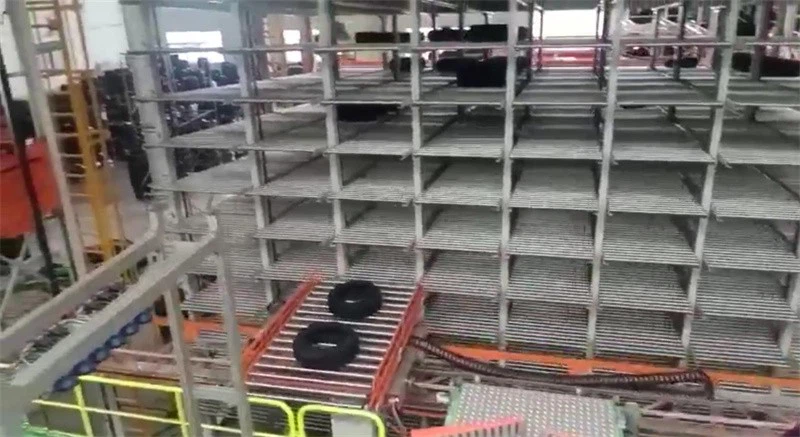

Flexibility and Scalability
AS/RS systems are highly flexible and scalable, making them suitable for a wide range of warehouse applications and business needs. AS/RS systems can be customized to meet the specific requirements of your warehouse, including the size and shape of the facility, the type and volume of inventory, and the throughput requirements. This flexibility allows you to design a system that is optimized for your specific needs, ensuring maximum efficiency and productivity.
In addition, AS/RS systems can be easily expanded or modified as your business grows and changes. For example, you can add additional storage modules, increase the height of the racks, or upgrade the control system to accommodate increased inventory volumes or throughput requirements. This scalability ensures that your AS/RS system can grow with your business, providing a long-term solution that can adapt to changing market conditions and customer demands.
Cost Savings
While the initial investment in an AS/RS system may be higher than that of a traditional racking system, the long-term cost savings can be significant. AS/RS systems can reduce labor costs by eliminating the need for manual material handling, as well as reduce energy costs by operating more efficiently. Additionally, AS/RS systems can reduce the cost of inventory management by providing accurate and real-time inventory tracking, reducing the risk of stockouts and overstocking.
In addition, AS/RS systems can reduce the cost of warehouse space by maximizing space utilization, allowing you to store more inventory in the same amount of space or reduce the size of your warehouse. This can result in significant savings on real estate costs, as well as reduced heating, cooling, and lighting costs. Overall, the cost savings associated with an AS/RS system can offset the initial investment over time, providing a positive return on investment (ROI) for your business.
Conclusion
In conclusion, the advantages of using an AS/RS over traditional racking systems in a warehouse are numerous and significant. From enhanced space utilization and improved inventory management to increased productivity, efficiency, safety, and flexibility, AS/RS systems offer a comprehensive solution for modern warehouse operations. As a supplier of AS RS for Warehouses, I'm committed to helping businesses of all sizes and industries leverage the benefits of AS/RS technology to improve their warehouse performance and competitiveness.
If you're considering upgrading your warehouse to an AS/RS system, I encourage you to contact me to learn more about our solutions and how they can be customized to meet your specific needs. Our team of experts can provide you with a detailed analysis of your warehouse operations, and recommend the best AS/RS solution for your business. We'll work with you every step of the way, from system design and installation to training and support, to ensure a smooth and successful implementation.
Don't miss out on the opportunity to transform your warehouse and take your business to the next level. Contact me today to schedule a consultation and learn more about how an AS/RS system can benefit your business.
References
- Tompkins, J. A., White, J. A., Bozer, Y. A., & Tanchoco, J. M. A. (2010). Facilities planning (4th ed.). Wiley.
- van den Berg, J. J. (1999). Design and control of automated guided vehicle systems. Kluwer Academic Publishers.
- Boysen, N., Fliedner, M., & Scholl, A. (2009). A classification of warehouse design and control problems. European Journal of Operational Research, 196(3), 839-849.